
Senator Paul H. Douglas, Dorothy Buell and Save the Dunes joined to create our national park
Author: Peggy Vanhala
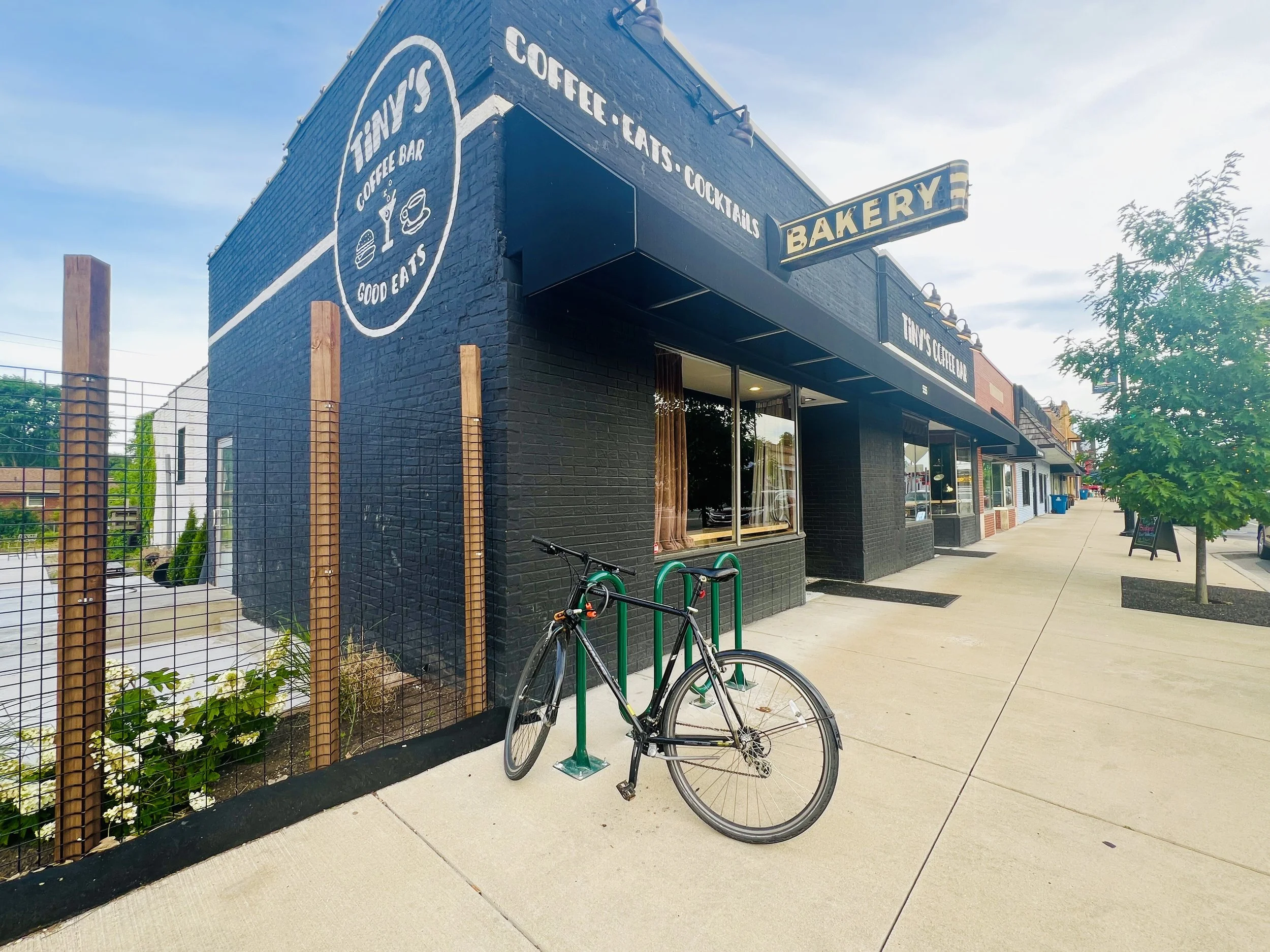
GARY, IN - You don’t have to leave town behind to enter Indiana Dunes National Park. In Miller Beach, the Paul H. Douglas Center for Environmental Education sits just two blocks from downtown, within walking distance of the South Shore Line’s Miller station. A visit can bring together a train ride, a meal on Lake Street, and an afternoon exploring a remarkable natural landscape.
From Downtown to the Dunes
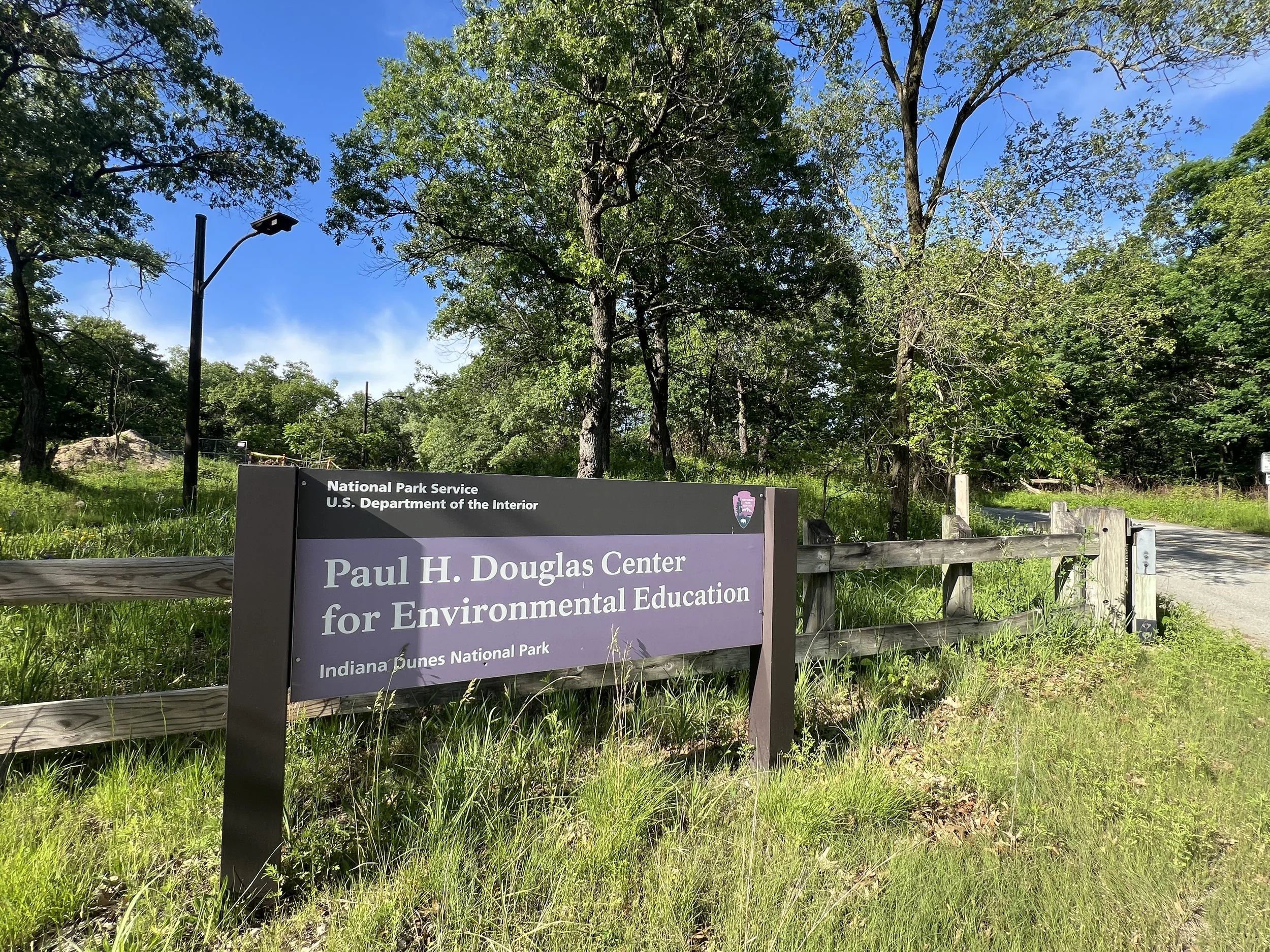

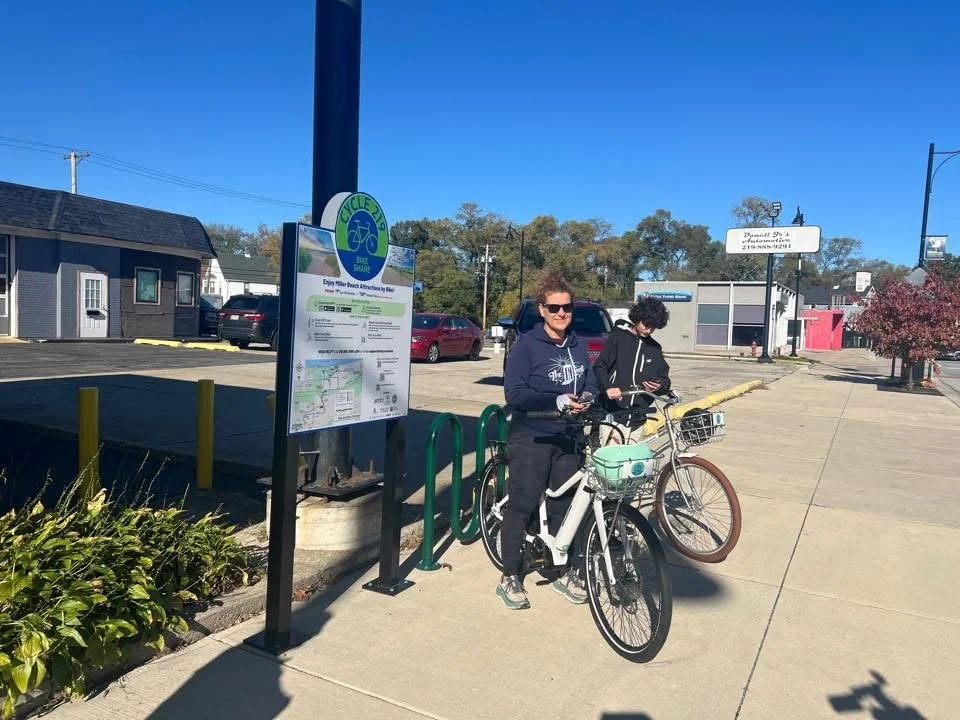
The Douglas Center is the gateway to Miller Woods—and Miller Woods Beach, the westernmost national park beach that’s a mile long. Getting there is part of the experience. The Paul H. Douglas Trail winds through wetlands, rare black oak savanna, and open dunes before reaching Lake Michigan. In addition to holding seminars for educators, the Douglas Nature Center serves family and communities with ranger led activities, has educational displays on the park and its history, and has a kids room with live reptiles, fish, and turtles
The beach hike is approximately 1.6 miles there and another 1.6 miles back. There’s also a shortcut back down Lake Street Bike Path on a paved walkway if you get tired! The 0.9-mile loop from the center offers an introduction to the woods and wetlands.
Between downtown and the lakeshore, visitors discover ponds tucked between ancient dune ridges, sunlight reaching through oak branches, and wildflowers growing in sandy soil. It is also a place to remember that none of this protection was inevitable.
The People Who Kept an Idea Alive
Secretary of the Interior Stewart Udall (right) and U.S. Senators Alan Bible (center) and Paul Douglas (left). Source: Chicago Historical Society
During a Zoom presentation hosted by Save the Dunes that I attended, Leo Lestino, acting superintendent of Indiana Dunes National Park, described the long effort to preserve the Indiana Dunes. His remarks brought the history back to the people who carried it forward—especially Dorothy Buell and Illinois Senator Paul H. Douglas, whose name the center bears.
Their story helps explain why this corner of Miller Beach matters.
The campaign for a national park began decades before Douglas introduced his first dunes legislation. In 1916, botanist Henry Chandler Cowles joined other advocates at a Chicago hearing supporting a dunes park. Cowles’s research had helped establish the landscape’s scientific importance, revealing how plant communities develop and change. (He is considered the Father of Ecology in North America for his Succession Plant Theory developed in the Indiana Dunes.)
The United States entered World War I the following year, shifting attention and resources away from preservation. The national park proposal remained unfinished business.
Indiana Dunes State Park opened in 1926, protecting an important portion of the shoreline while leaving extensive dunelands outside its boundaries exposed to development. In 2026, we celebrate one hundred years since the state park opened.
Dorothy Buell Finds an Ally
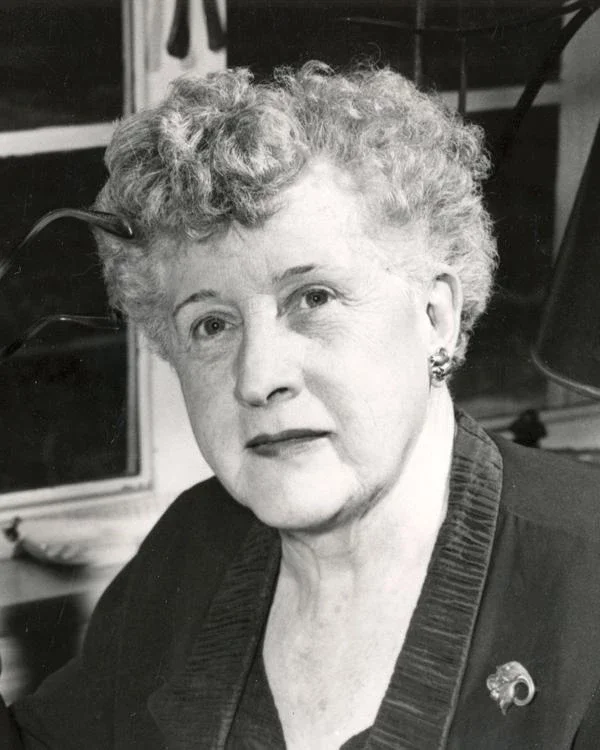
Dorothy Richardson Buell NPS image collection. Heroin of the Dunes article.
A generation later, Dorothy Richardson Buell took up the unfinished work. In 1952, at sixty-five, she assembled twenty-five women in her Ogden Dunes living room and founded the Save the Dunes Council. Their commitment was extraordinary:
“We are prepared to spend the rest of our lives if necessary to save the dunes.”
They would need that resolve. Industrial expansion threatened the remaining dunes, and Indiana’s political leaders initially offered little support for a national park. Superintendent Lestino’s account emphasized how exhausting advocacy can become. An idea needs people willing to keep it alive through disappointment, delay, and repeated refusals. Buell and her fellow advocates supplied that endurance.
An unexpected connection helped them find an influential ally. A historical presentation preserved by the Historical Society of Ogden Dunes recounts that Buell’s plane was grounded in Santa Barbara during a California trip in early 1958. She sought out nature writer Donald Culross Peattie, an adviser to Save the Dunes. He was ill, but his wife, author Louise Redfield Peattie, listened to Buell’s concerns.
Louise suggested contacting her friend Emily Taft Douglas, a former congresswoman and the wife of Senator Paul Douglas. Emily was also the daughter of sculptor Lorado Taft, who had supported the earlier dunes preservation movement.
The connection reached someone who already loved this landscape. Emily and Paul had a cabin in Dune Acres, where they walked, swam, and found relief from their busy lives. According to the historical society’s account, Douglas called Buell on Easter Sunday in 1958 to say he intended to introduce preservation legislation.
Paul Douglas and the Fight for Federal Protection
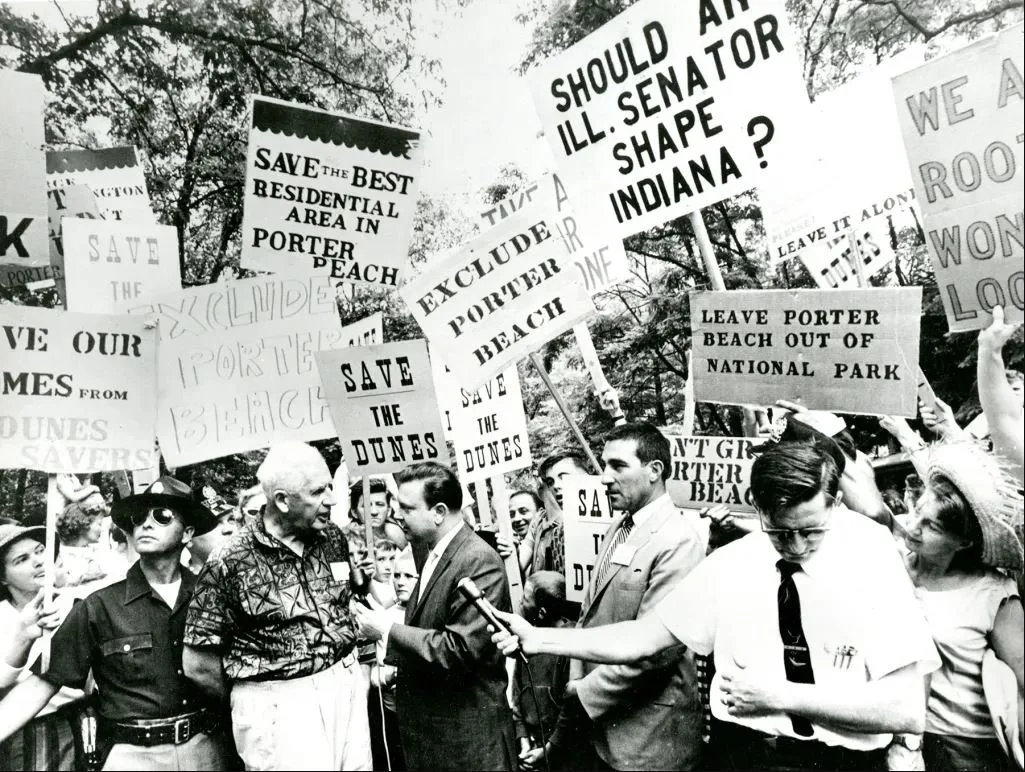
Although he represented Illinois, Douglas understood that the dunes served people throughout the region. Their value crossed state lines. He became a persistent congressional champion, introducing legislation and working through years of conflict over a proposed harbor, industrial development, and public access to the shoreline.
The eventual compromise came with painful losses. Important portions of the Central Dunes were destroyed. But the advocates secured federal protection for surviving landscapes and a foundation for future expansion.
On November 5, 1966, President Lyndon B. Johnson signed the legislation authorizing Indiana Dunes National Lakeshore. His statement began:
“The bill to establish the Indiana Dunes National Lakeshore has been 50 years in the making.”
Johnson specifically recognized Douglas’s tireless work. Sixty years later, that anniversary is an opportunity to remember the citizens whose persistence made congressional action possible.
A Living Legacy in Miller Woods
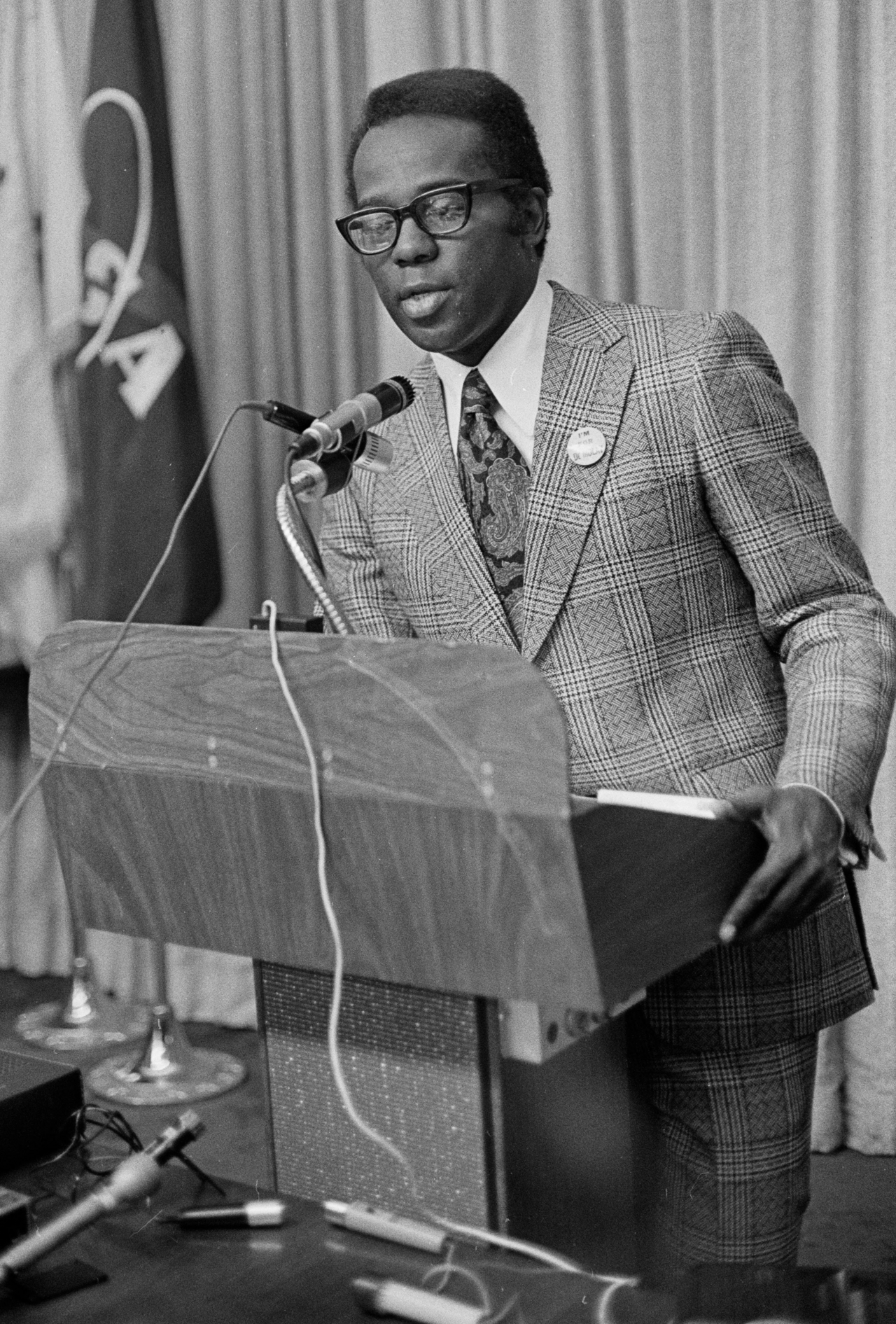
Garry Tyler for the Daily World - https://findingaids.library.nyu.edu/tamwag/photos_223_001/images/rv15f7gb/https://www.newspapers.com/image/1140482305/
The work continued after 1966. The 1976 expansion brought Miller Woods into the national lakeshore. Later, the Douglas Center gave this protected landscape a home for environmental education. About 10% of the national park is in Gary, along with 3.5 miles of Indiana Dunes beaches of the 15 mile total.
Groundbreaking took place on May 29, 1985, with Gary Mayor Richard Hatcher among the speakers. A luncheon followed at the Marquette Park Pavilion. In his Zoom remarks, Lestino recalled Hatcher’s message that communities could help shape their future rather than simply allow it to happen to them.
The center was dedicated on September 14, 1986, with Douglas’s daughter, Dr. Jean Taft Douglas, among those attending. Full operation began in January 1987.
There were several dedications along the way. The original national lakeshore ceremony took place at Indiana Dunes State Park in 1972. The Douglas Center’s dedication brought a lasting tribute to Miller Woods in 1986. A further ceremony in 1992 honored Douglas by dedicating the national lakeshore to his memory.
A bust of Senator Paul H. Douglas is inside the Douglas Center at 100 N. Lake St., Gary, IN 46403. Lestino shared a personal remembrance of a hike with Douglas’s grandson and the striking family resemblance to the senator’s bust. Behind a name on a public building stands a person—and a family whose history remains connected to the place.
Walk the Landscape They Helped Preserve
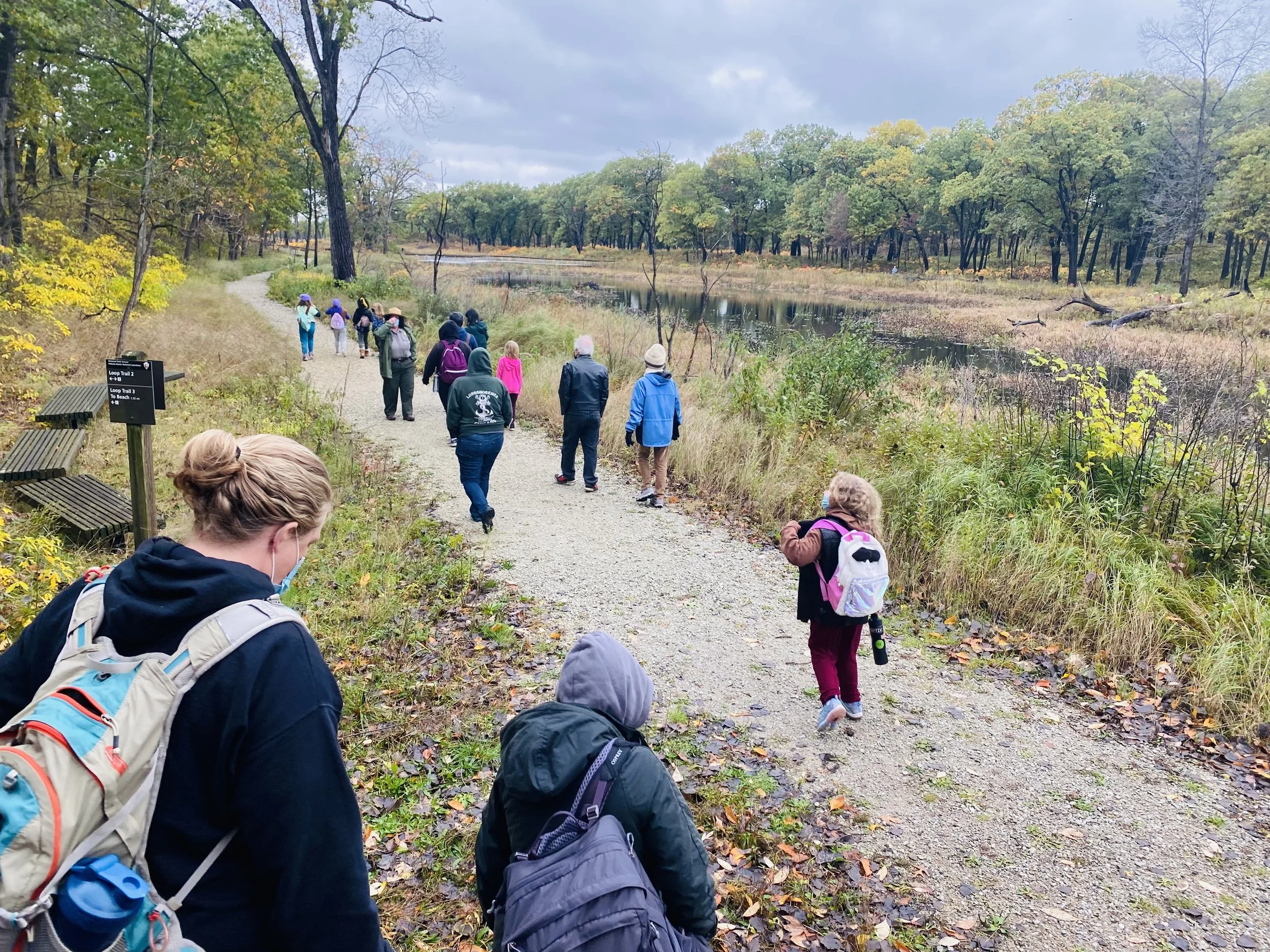
Ranger led hike just outside of the Douglas Center to Miller Woods. Photo: Peggy Vanhala
Today, the Douglas Center carries that legacy forward through learning and exploration. Outside, the trail reveals the landscape that so many people fought to preserve. Miller Woods contains globally rare black oak savanna, where native grasses and lupine flourish beneath an open canopy. Wetlands give way to dunes, and eventually the lake comes into view.
The national lakeshore became Indiana Dunes National Park in 2019. Here in Miller Beach, its meaning is close and familiar: woods near downtown, a trail accessible from the neighborhood, and a beach reached on foot through protected land.
Superintendent Leo explained that the story brings to mind the Gospel parable of the mustard seed—a small beginning growing beyond what its first caretakers could see. Twenty-five women in a living room could not know every child who would someday explore these ponds. Douglas could not know every visitor who would walk the trail bearing his name.
Their work made those visits possible.
Begin at the Douglas Center. Take time with the wetlands, follow the path beneath the oaks, and, if you have the time and energy, continue to the beach. Then return to downtown Miller Beach carrying a little more understanding of the place—and of the people who kept its future alive.
Help Protect the Dunes
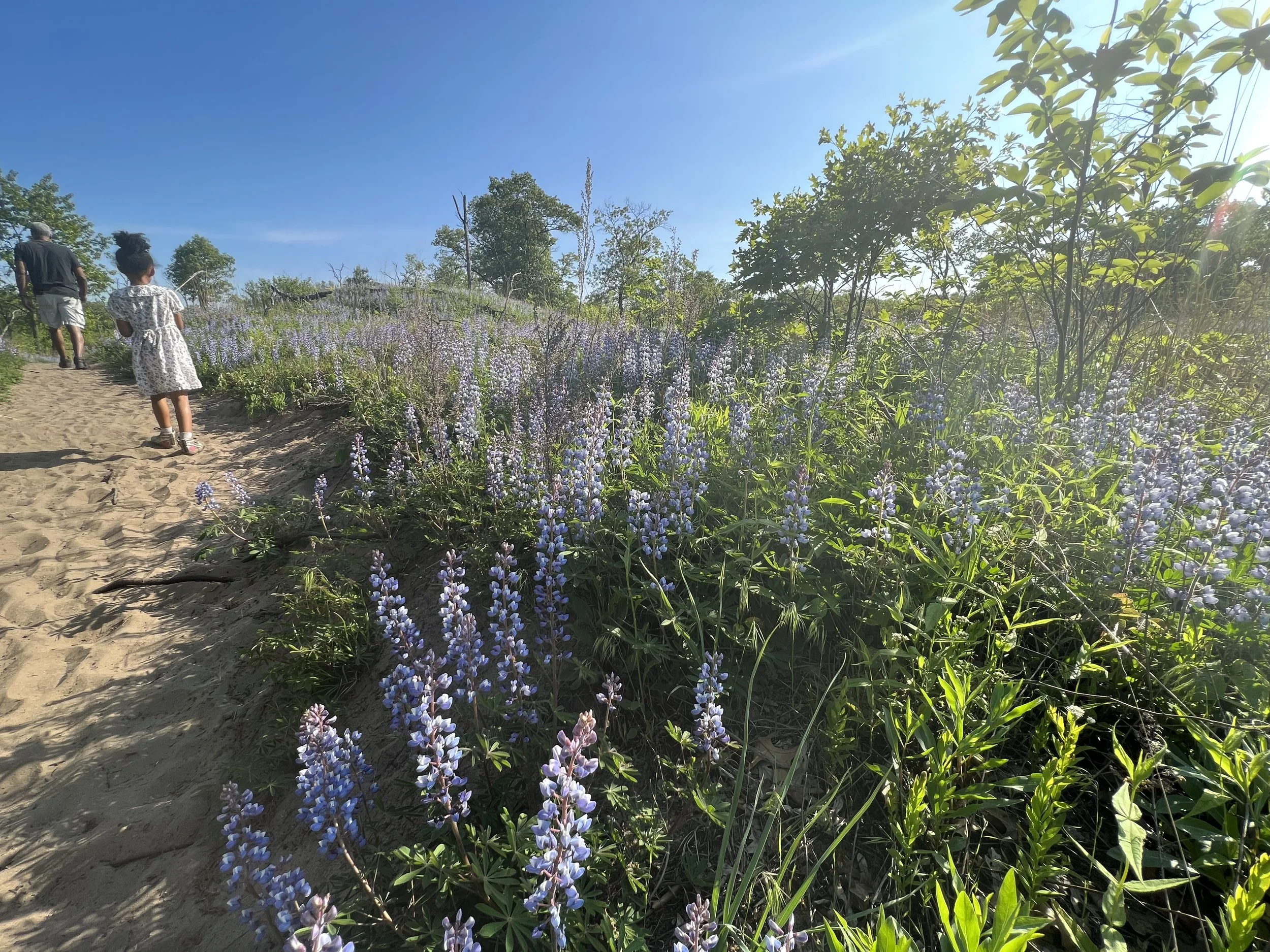
Miller Woods Hike in May while the lupines are in bloom. Photo: Peggy Vanhala
Save the Dunes remains an active and important advocate for the Indiana Dunes to this day. Help carry that legacy forward by supporting their work to protect the dunes, Lake Michigan, and surrounding natural areas.
Support the Visit Miller Beach Blog
Help keep our blog active by donating to Visit Miller Beach. Your support helps us share the stories, history, and natural beauty of our community.
Based on historical research and notes from a Zoom presentation by Leo Lestino, acting superintendent of Indiana Dunes National Park, hosted by Save the Dunes.