

Migrating Caspian Terns at Lake Street Beach on an April day. (Chicago skyline on the horizon) Photo: Erika Blackwell
Jaegers, migrating shorebirds, and a different kind of getaway on Lake Michigan
Authored By: Brad Bumgardner, Executive Director, Indiana Audubon
Most people on the beach never notice any of it, and the birds passing overhead at night go unnoticed by almost everyone. By then the summer crowds are gone anyway. What’s left is a lawn chair, a thermos, and one of the best seats in Indiana to watch fall migration go by.
Miller Beach is a sit-and-wait kind of birding place, and that’s part of why I like it. There’s time for good conversation while you wait for something to fly by. Sometimes quite a bit of conversation on the slow days!
The Indiana Birding Trail lists the Miller Beach area due to its amazing bird diversity. While summer through fall as an especially rewarding time to visit, it really is a year-round bird watching destination.
Watching for Jaegers
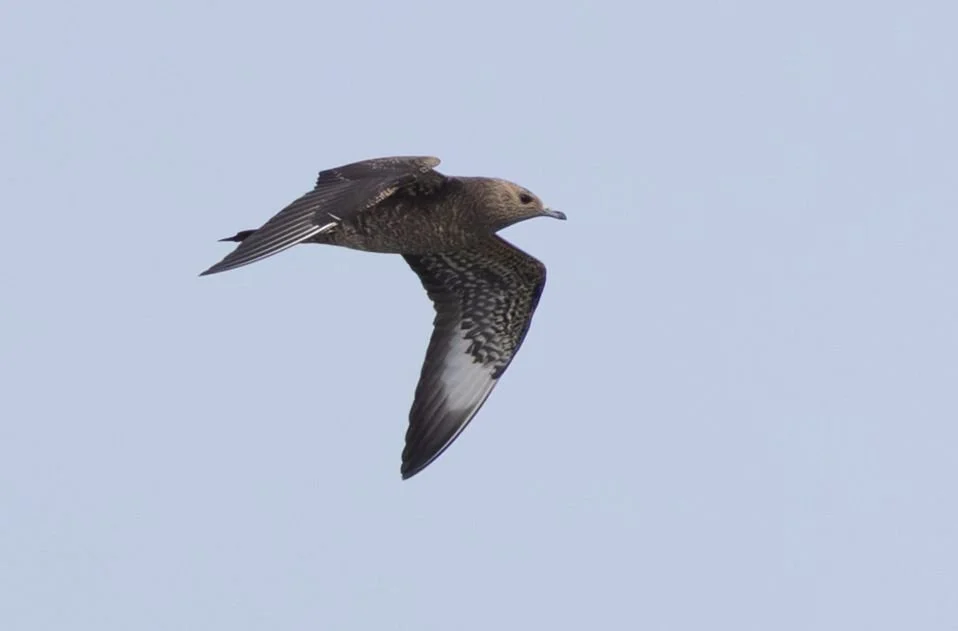
One of the best places to see a Parasitic Jaeger outside of the ocean coast, is Miller Beach. Photo: Woody Goss, Indiana Audubon.
Jaegers are a big reason birders are willing to wait. These seabirds chase gulls and terns until they give up their food, and all three species, Parasitic, Pomarine, and Long-tailed, have been recorded here.
For an inland birder, that’s reason enough to spend a morning scanning Lake Michigan. Miller Beach is one of Indiana’s best-known places to try.
Finding one takes practice. Look for a bird pursuing gulls or terns offshore, and watch how the birds around it react. A spotting scope helps, especially when the action is well beyond the breakers.
One September afternoon, with hardly anyone on the beach, I sat on the wet sand and watched a Buff-breasted Sandpiper walk right past me, as terns were calling overhead. The “buffy” is a bird I’m usually trying to pick out of the grass. Here it was out in the open, and I just sat and watched it go by.
Along the Beach
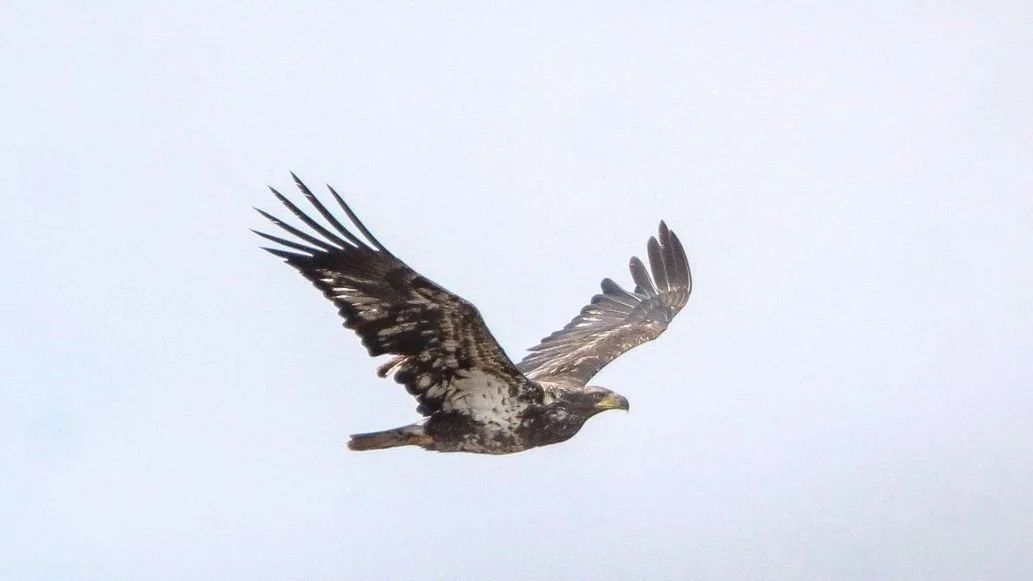
Bald Eagle. Photo: Cory Wagner, Indiana Audubon.
You can also leave the distant birds to the people with spotting scopes and watch what’s feeding along the water’s edge.
Watch the shoreline for sandpipers and plovers running ahead of each wave, and take a closer look at the gulls loafing on the beach. They are rarely all the same species.
I remember Piping Plovers and Red Knots strolling down the beach, right past the photographers. Sit still and give the birds room, and they may come past you on their own.
If the lake is dead, walk the beach. If the beach is dead, check the trees.
Giving Piping Plovers Room
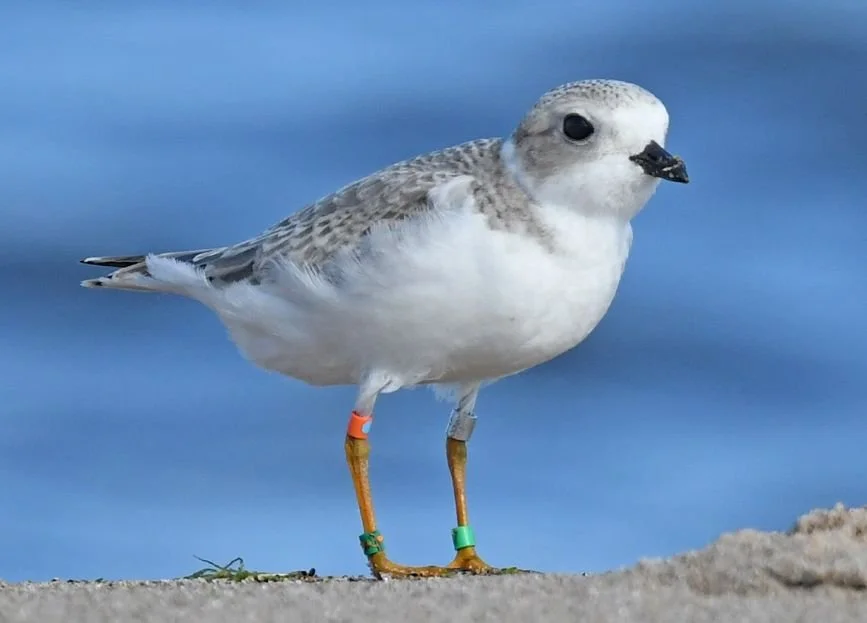
Piping Plover at Miller Beach. Photo: Michael Topp, Indiana Audubon.
Piping Plovers are pale, sand-colored shorebirds that are easily overlooked, and the Great Lakes population is federally endangered. Their survival depends on beaches where they can feed, rest, and raise young without repeated disturbance.
Indiana Audubon’s historical accounts describe Piping Plovers nesting at Miller Beach in the early twentieth century. More recent records connect Indiana’s shoreline with the movements of individually banded birds around the Great Lakes.
Don’t count on finding a Piping Plover on any particular visit. If you do, take the time to watch from a distance. These are birds with very little beach habitat to spare.
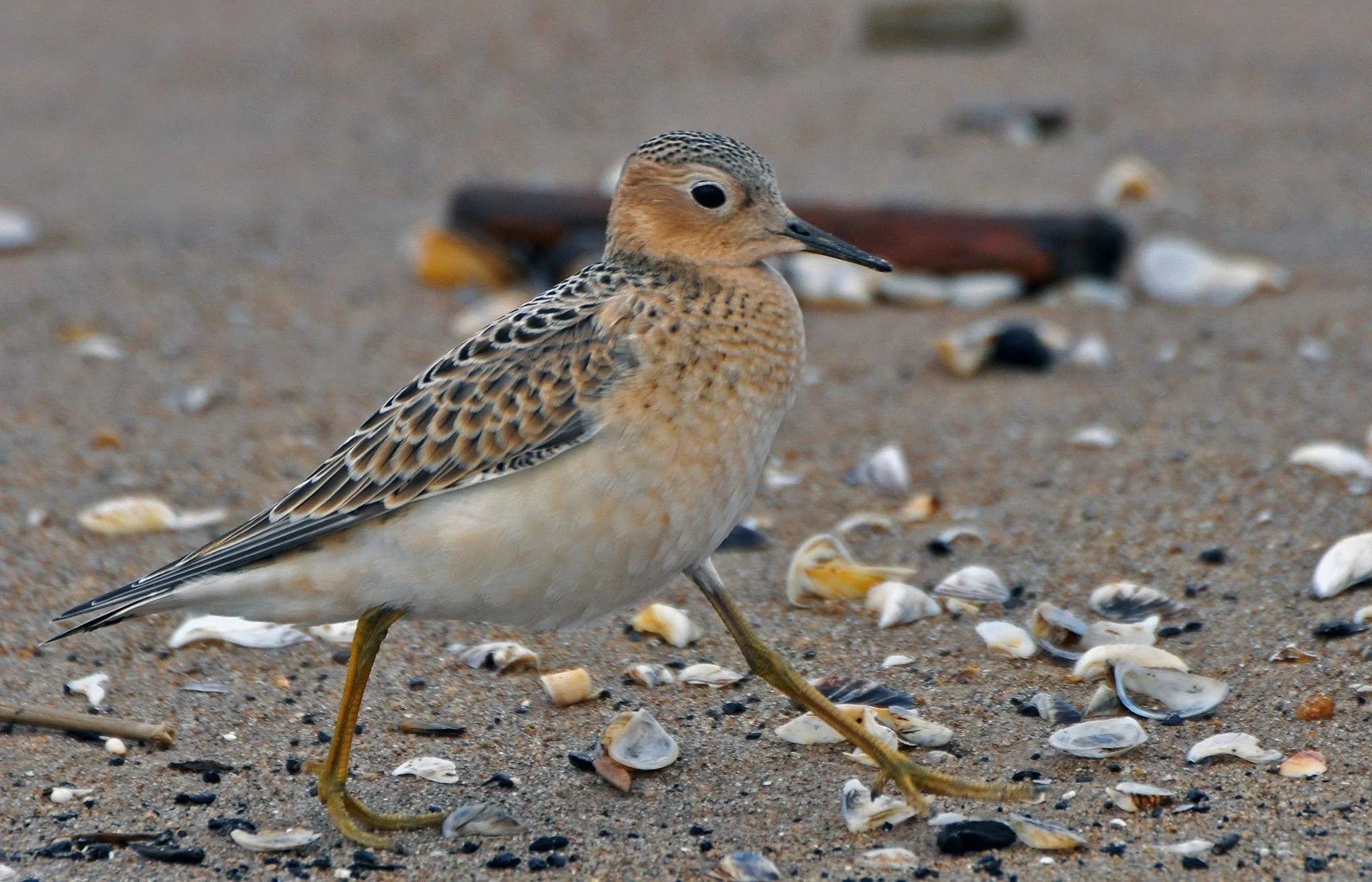
Buff-breasted Sandpiper. Photo by Brad Bumgardner, Indiana Audubon.
If you encounter a plover or other resting shorebirds, give them space. Watch through binoculars, respect posted closures, and avoid repeatedly flushing birds for a closer photograph. A bird that keeps moving away from you has already answered the question of whether you are close enough.
Exploring Miller Woods

Park at the Paul H Douglas Center to walk the trail to the lake via a sandy trail thru the woods, or on the Lake Street Bike Path.. Photo: Peggy Vanhala
When you’re ready for a walk, Miller Woods gives you a change of habitat without leaving the neighborhood.
The Paul H. Douglas Trail in Miller Woods, part of Indiana Dunes National Park, passes through wetlands, black oak savanna, dunes, and beach. It’s a good option when you want to look for birds in the woods as well as along the lake.
Choose a shorter walk near the Douglas Center or allow more time for the route toward Lake Michigan. The Miller Woods beach trail is nearly 1 ½ miles to the lake through oak savanna, interdunal ponds, and a lot of loose sand. (Walk back on Lake Street from the parking lot if you need a short cut back.)
Check current conditions before setting out. The lakefront can feel dramatically different from the woods, even during the same outing. If you’re coming from downstate, a winter coat might even need to be considered on by late October!
Planning a visit

Marquette Park has parking next to this beach concession, so it’s convenient to get out there on the lakefront. These birders gather from Illinois, Indiana, and Michigan to watch the migration and count for Indiana Audubon. Photo: Peggy Vanhala
For a late fall visit, I’d leave the schedule loose. Start at Marquette Park or Lake Street Beach and see what’s moving before deciding how long to stay.

Common Loon. Photo by Marky Mutchler, , Indiana Audubon.
This time of year, the cast changes. Shorebirds and jaegers are mostly gone by late November, but the lake picks up loons, scoters, and other diving ducks. Snow Buntings work the upper beach, and a lucky few find a Purple Sandpiper on the breakwalls. It’s colder and quieter, and you may have the beach to yourself.
Bring binoculars, warm layers, and something to block the wind. A spotting scope helps with distant birds, but you can enjoy the beach birds and explore Miller Woods with binoculars alone.
Warming Up on Lake Street

Tiny’s is a restaurant, bar and coffee bar 2 blocks south of the NPS Douglas Center on Lake Street. Photo: Tiny’s
When your toes go numb, walk up to Tiny’s Coffee Bar on Lake Street for coffee or a delicious . It’s two blocks from the Douglas Center, so it pairs well with a walk in Miller Woods. Their menu even has a latte named for Octave Chanute, who tested his gliders in these same dunes in 1896.
Spring Brings the Birding Festival
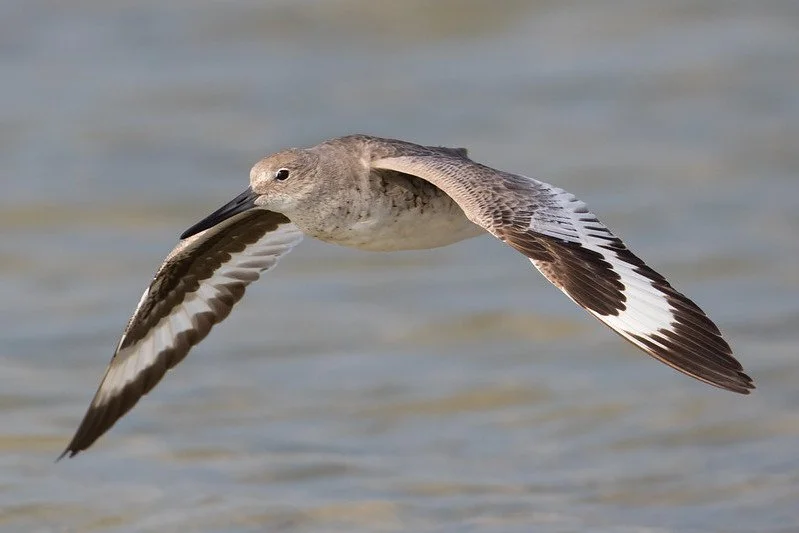
Prairie Willet. Photo by Ryan Sanderson, Indiana Audubon.
If you’d rather visit with a guide, spring brings the Indiana Dunes Birding Festival.
The Indiana Dunes Birding Festival, hosted by Indiana Audubon annually, is scheduled for May 13–16, 2027, with guided trips, workshops, and presentations across the region.
For a first visit, though, a free morning and a lawn chair are a perfectly good start. Plan on some waiting. Bring someone you enjoy talking with.
About the Author
Brad Bumgartner is the Executive Director of Indiana Audubon, where he works at the intersection of bird conservation, research, education, and public engagement. A lifelong birder and former naturalist at the Indiana Dunes State Park, Brad has helped develop migration monitoring, birding festivals, community science, and conservation programs across Indiana, including Indiana Audubon’s Lake Michigan research initiatives.
The Visit Miller Beach Blog is made possible by a Legacy Foundation, Press Forward Grant.