
The Foredune’s Secret Weapon: Why Cottonwood Trees Are Shoreline Heroes
Author: Rebecca Sherman
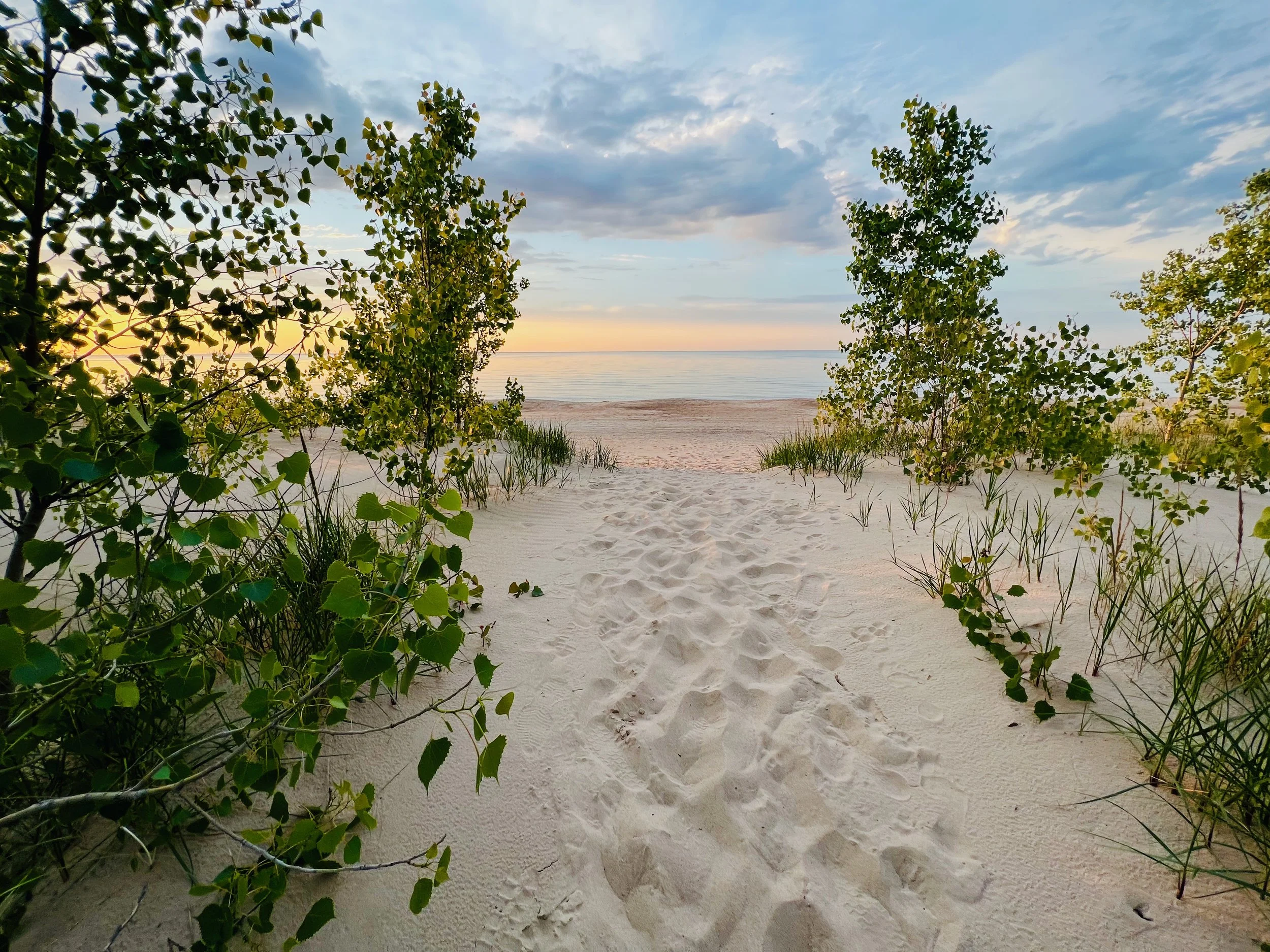
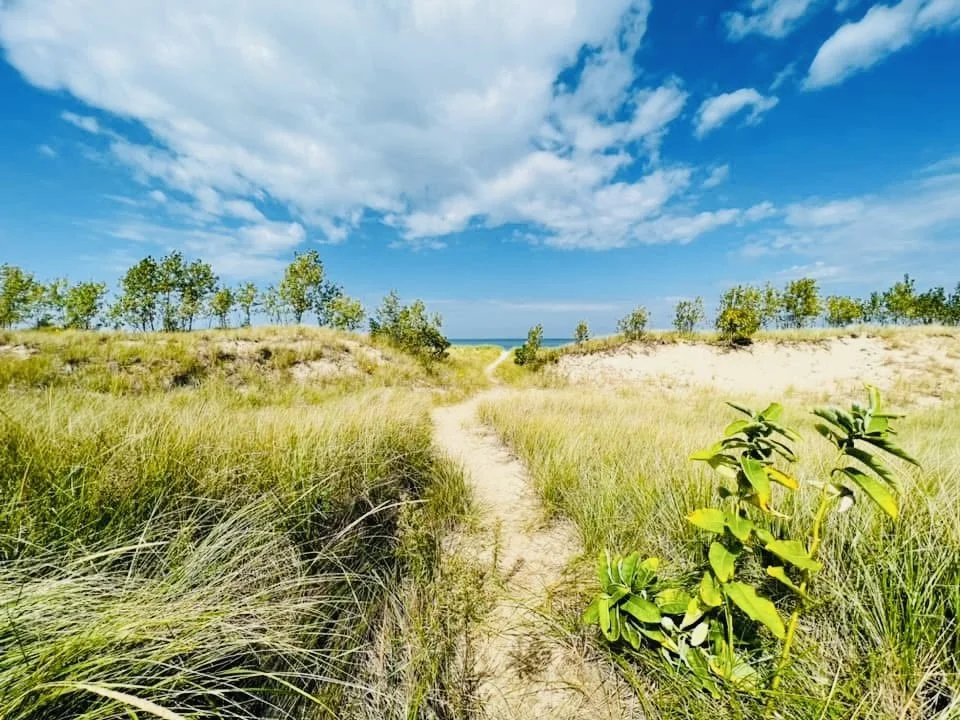
Beach path in Marquette Park with young cottonwoods.
GARY, Indiana - When you picture Lake Michigan’s coastal dunes, your mind probably jumps straight to sweeping sand, rolling waves, and endless carpets of marram grass. But if you look up at the crest of the foredune, you’ll see another absolute giant of coastal ecology standing guard: the Eastern Cottonwood.
While they might look like ordinary trees taking in the lake views, cottonwoods are essential ecosystem engineers working alongside marram grass to shape, protect, and anchor our shoreline. Here is why these remarkable trees are so critical to the life and survival of the foredune.
1. They Act as Deep Structural Anchors
While pioneer grasses, like marram grass, do a phenomenal job holding together the top layers of sand, cottonwoods handle the heavy lifting down below. Their deep, expansive root networks penetrate far into the core of the dune, anchoring it from within. This massive underground root system preserves the gentle contours of the dune and swale landscape—preventing the steep, wall-like dunes characteristic of shorelines absent of cottonwoods while keeping lake views sweeping and open.
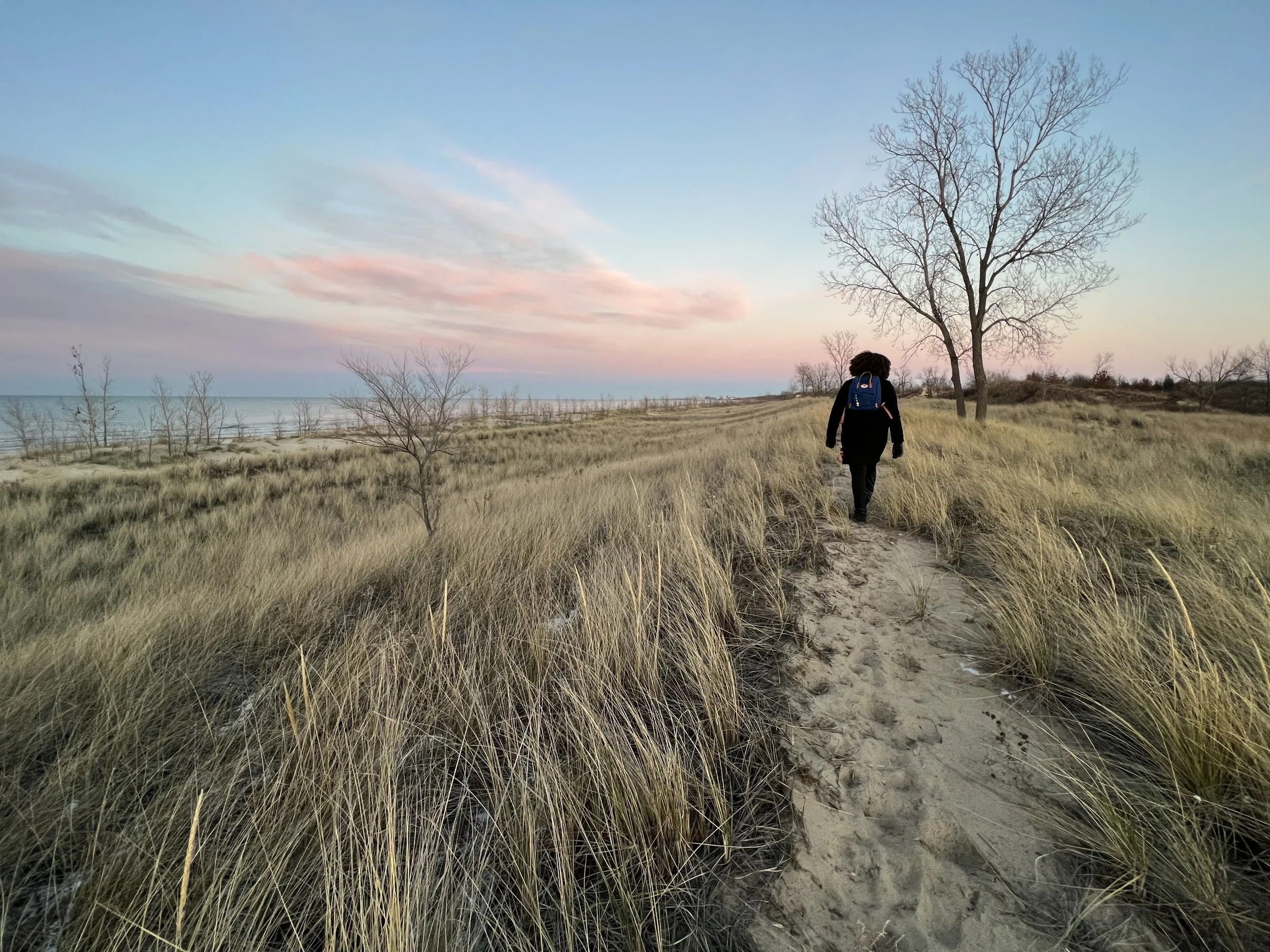
Young cottonwoods line the shore and help stabilize the dunes with the marram grass.. Taken in Marquette Park Gary. Photo Credit: Peggy Vanhala
Marram grass and cottonwoods interact with the wind and moving sand in complementary ways. While marram grass rapidly captures windblown sand and grows upward with it, cottonwoods introduce a much larger, three-dimensional framework into the foredune. Working in tandem, marram grass and cottonwood trees shape the dynamic, ever-changing architecture of the foredune.
2. The Phoenix of the Dunes: Built for Sand Burial and Rebirth
Imagine living in a place where the wind screams, the sun burns, and the ground is shifting sand. On the foredune, survival means facing the constant threat of being buried alive. It might look like a harsh environment, but it is actually a natural superhero battleground where native plants fight to build and hold the land.
Like a Phoenix rising from what should destroy it, the cottonwood pulls off the ultimate superhero feat by turning sand burial into a miraculous rebirth. As blowing sand swallows a young tree, it simply sprouts brand-new roots straight out of its buried trunk. As the dune rises, the tree rises with it. Over decades, a 20-foot cottonwood standing proudly on a ridge might actually be anchored by 30 feet of buried trunk hidden below—turning what attempted to bury it into a permanent, multi-tiered foundation.
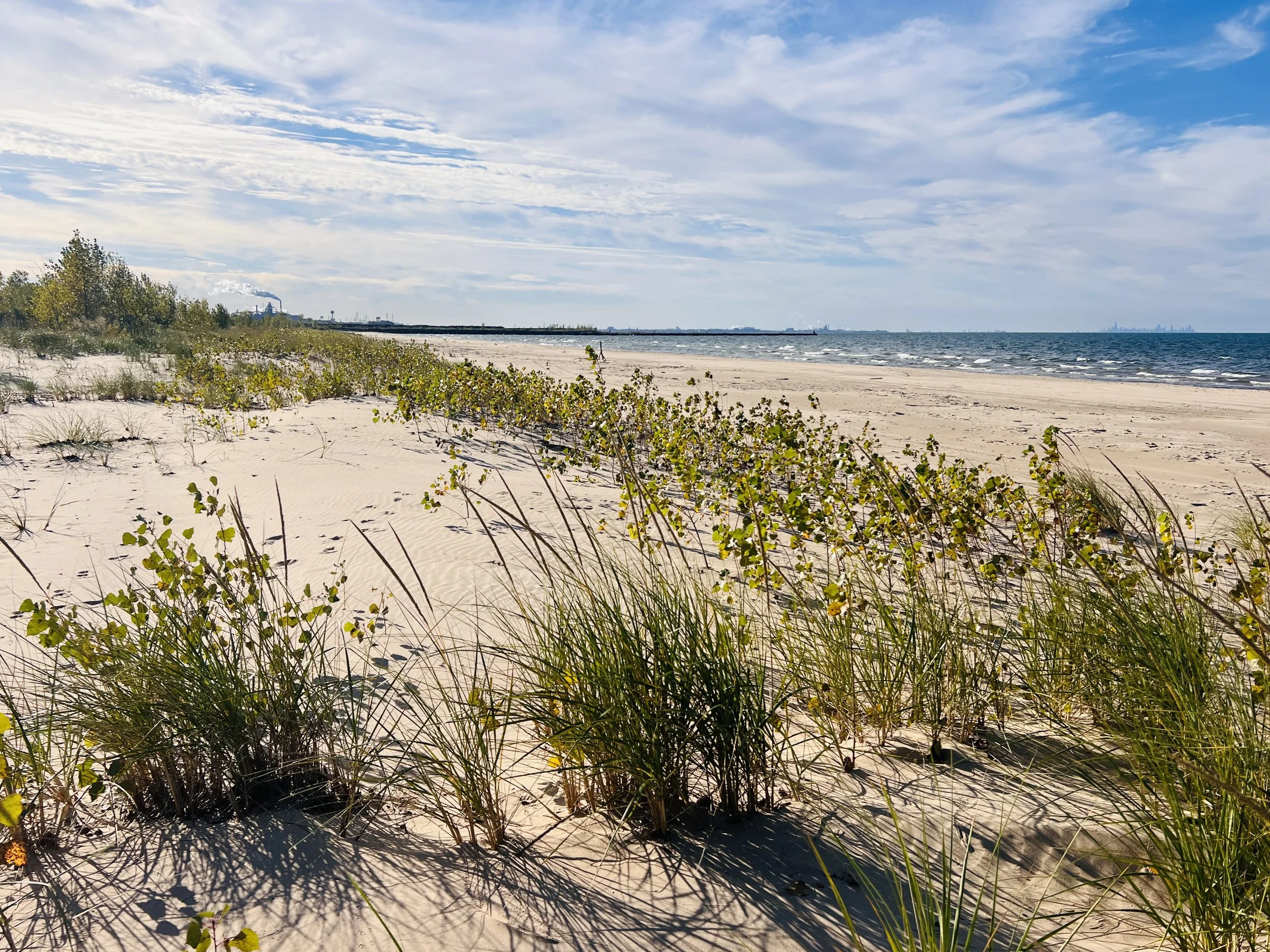
Baby cottonwoods and marram grass team up to build a new set of foredunes at Miller Woods Beach, Gary. The drifting sand piles up against and buries the baby trees as they continue growing roots and stabilizing the dunes. Photo Credit: Peggy Blackwell
Even more heroic? Cottonwoods rarely fight alone. Those clusters of trees you see along the ridge are often clones, all connected underground and sharing one massive, continuous root system. What looks like a grove is actually a single, invincible organism—rising together to defend and hold our shoreline.
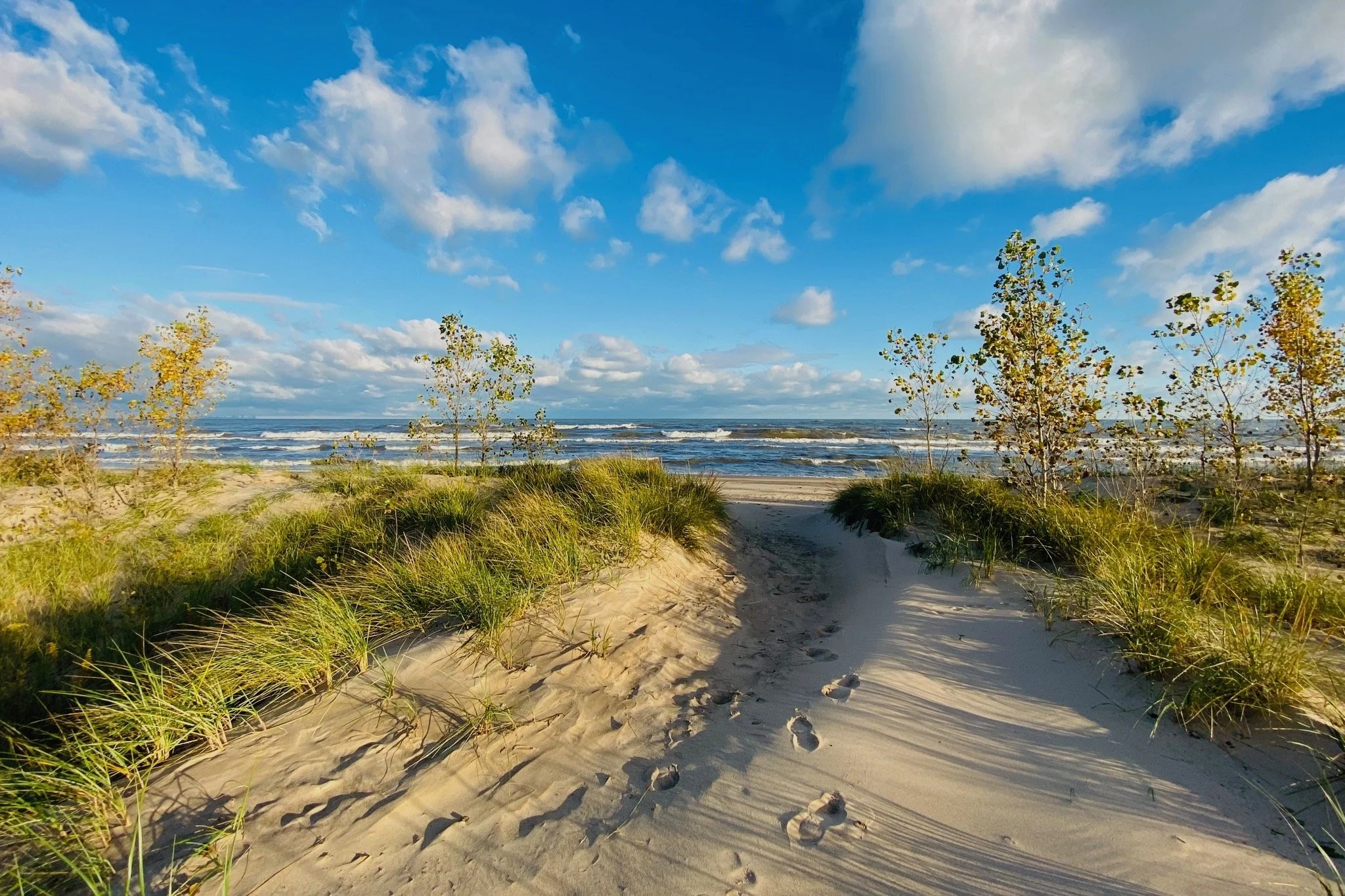
Young cottonwoods guard the beach path onto Miller Woods Beach in Gary. Photo Credit: Peggy Vanhala
3. They Break Up High-Velocity Storm Winds
Severe storms with straight-line winds can easily carve deep, steep blowouts into unprotected sand slopes. Because cottonwoods grow so fast and tall—often shooting up several feet a year—their broad canopies act as high-altitude windbreaks. By interrupting and buffering heavy wind currents before they hit the ground, they reduce surface turbulence and help maintain a wider, more gradual, and resilient foredune slope.
4. They Hold Hidden Magic (Inside and Out)
Beyond their raw engineering power, cottonwoods bring wonder and vibrant life to the coast:
Sensory & Lore
The "Rustling" Canopy: Cottonwood leaves have unique, vertically flattened stems (petioles). The slightest lake breeze makes the leaves flutter back and forth, producing a gentle, signature rustling sound that cools the tree, minimizes storm damage, and creates the relaxing acoustic backdrop of the dunes.
The Star at the Center: If you snap a small cottonwood twig in half, the spongy central pith forms a perfect, five-pointed star—a nod to local folklore that these giant trees reach up to catch and hold falling stars within their branches.
Striking Blue and Green Landscapes: Visually, cottonwoods transform the shore. Their broad, emerald-green canopies create a stunning color contrast against the deep blues of Lake Michigan and the golden sands of the foredune, softening the landscape and shaping the iconic coastal views we love.

Late fall view of cottonwoods in Marquette Park Gary, Lake Michigan, clouds and a coastal dunes. Photo credit: Peggy Vanhala
5. Ecosystem & Wildlife
A Beacon for Migrating Birds: Perched right along the Lake Michigan shoreline, cottonwoods serve as vital rest stops along a critical avian highway. During spring and fall migrations, tired songbirds rely on the lush canopy for food and shelter after long journeys across the water, while soaring raptors like bald eagles and hawks use the high branches as lookout posts.
Ecosystem Hubs: Beyond migratory visitors, older trees naturally develop hollows that provide year-round shelter for screech owls, bats, woodpeckers, and small mammals, making each tree a self-contained forest neighborhood.
The shoreline cottonwoods guide migrating birds to shoreline resting spots. Cottonwoods serve as vital rest stops along a critical avian highway.
Living Alongside the Dunes: A Shared Call to Stewardship
Here in Miller Beach, we are fortunate to live beside one of the most unique coastal stretches on Lake Michigan. To access the beach from the neighborhood, you have to walk through public trails meandering straight through the foredune, often shaded directly beneath the sweeping canopies of these towering cottonwoods. Nearly every north-south street in the neighborhood from Newton Street all the way to County Line Road features a path at the end of it, leading residents and visitors alike past the dunes and out to the open shore.
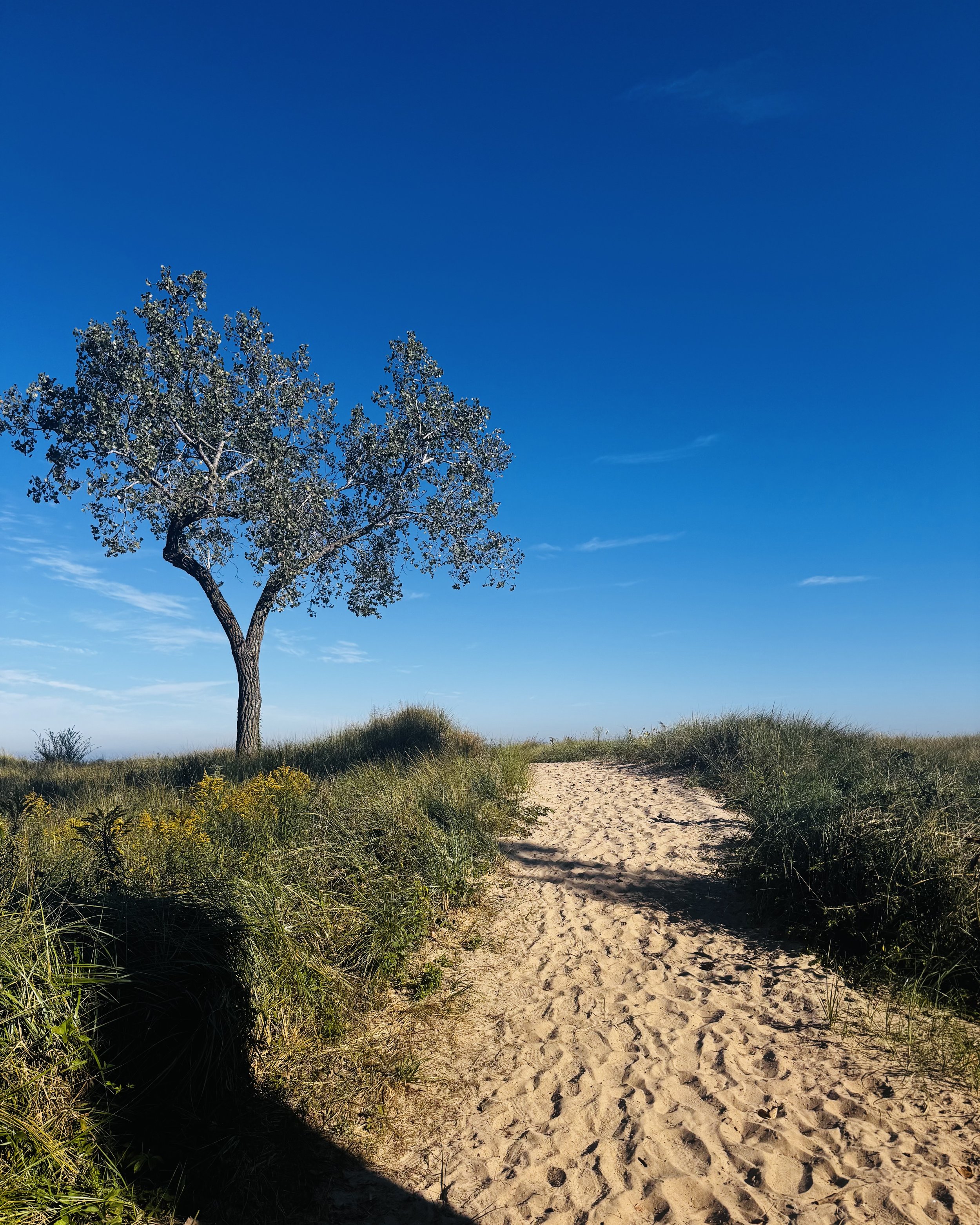
A lone cottonwood in a residential area of Miller Beach stands guard on the path to the beach. Photo Credit: Rebecca Sherman
Because of this unique layout, those of us who live here share a special responsibility. We aren't just neighbors; we are stewards of a fragile ecosystem. By protecting the native vegetation on our foredunes—especially deep-rooted heroes like the cottonwood—we help preserve the delicate balance that keeps our shoreline intact and our sweeping lake views open.
Our commitment to keeping this habitat wild pays off every day. It’s why regular sightings of soaring bald eagles, red-tailed hawks, gray foxes, and white-tailed deer are just a normal part of daily life here.
The next time you take your regular walk down the street to the beach path, take a moment to look up at the cottonwoods standing guard over the trail. Even when battered by storms, they remind us that when we care for our native plants, the whole ecosystem thrives, protecting the place we call home for generations to come.
Have you spotted any eagles, foxes, or star-centered twigs during your walks along Miller Beach? Share your favorite shoreline wildlife sightings in the comments below!
Rebecca Sherman brings 13 years of hands-on environmental science experience to her deep love for the Indiana Dunes and the Lake Michigan shoreline. With a background centered on community and school outreach—including work with the National Park Service at the Paul H. Douglas Center and serving on the Board of Directors for the Dunes Learning Center—her passion for coastal conservation, preservation, and sharing the unique story of the dunes runs as deep as a cottonwood's roots. Today, Rebecca lives in Miller Beach with her husband, Brent, where they co-host local short-term rentals, blending hospitality with a commitment to protecting our fragile coastal ecosystem.
The Visit Miller Beach Blog is made possible by a Legacy Foundation, Press Forward Grant.